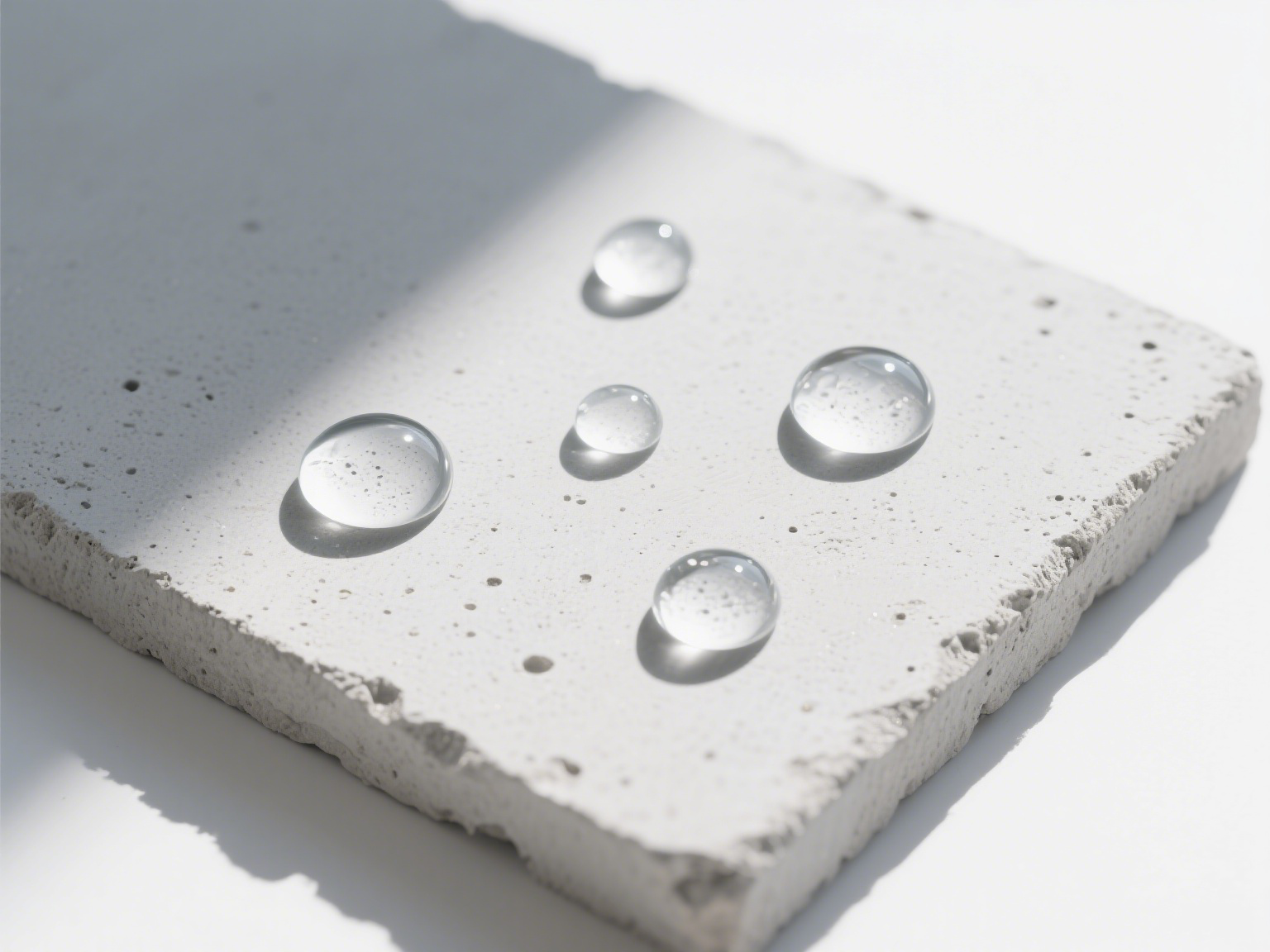
The 2023 study “Mechanisms of Hydrophobic Materials in Cement-Based Composites” (Cement and Concrete Research) elucidates for the first time the dual physical-chemical mechanism by which hydrophobic powders block water penetration, providing a theoretical foundation for next-gen waterproof construction materials.
▍Core Mechanistic Insights
Physical Shielding: Nano-Scale Pore Filling
Stearates (e.g., calcium stearate) and modified silica powders (0.1–10 μm) fill capillary pores (50–500 nm) in cement, reducing pore connectivity and cutting water absorption by >70%.Chemical Bonding: Targeted Anchoring via Active Groups
Silane-based agents (—Si—OR) hydrolyze into silanols (—Si—OH), condensing with C—S—H gels to form stable Si—O—Si and Si—O—Ca covalent bonds, creating low-surface-energy films (<30 mN/m).
▍Industrial Applications
Enhanced Durability: Chemical bonding ensures long-term efficacy, maintaining contact angles >100° after 5-year accelerated aging (vs. 1–2 years for physical adsorption types).
Strength Preservation: Optimal dosage (0.3–0.8 wt%) limits compressive strength loss to ≤5%, avoiding mechanical degradation.
Sustainability: Synergy with industrial waste (e.g., ceramic powder) reduces carbon footprint.
Outlook: This research advances hydrophobic agents from “additives” to “structurally integrated materials,” with industry leaders like Botai Building Materials initiating R&D for third-generation waterproofing agents.