I. Core Functions & Selection Guidelines
| Property | HPMC | HEMC | Performance Impact |
|---|---|---|---|
| Water Retention | Excellent (superior thermal stability) | Excellent (better low-temperature performance) | Reduces mortar water evaporation, prevents cracking |
| Dissolution Rate | Fast in cold water (surface-treated options available) | Slower (higher enzymatic degradation resistance) | Affects open time |
| Viscosity Range | 4,000-200,000 mPa·s | 5,000-100,000 mPa·s | High viscosity = thickening; Low viscosity = leveling |
| Ion Tolerance | Sensitive to polyvalent ions | Superior electrolyte resistance | HEMC offers better stability in cementitious systems |
| Gelation Temp. | 60-90°C (methoxy group dependent) | 70-75°C | Select high gel-temp grades for hot climates |
Selection Protocol:
Tile Adhesive/Mortar: HPMC (40K-80K mPa·s, high water retention)
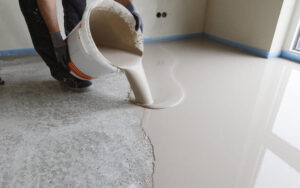
Self-Leveling Compounds: HEMC (10K-20K mPa·s, enhanced flow)
ETICS Render: HEMC (alkaline resistance for high-pH cement environments)
II. Critical Application Techniques
1. Dissolution Optimization
-
Pre-dispersion Method:
Dry-mix with fine aggregates (e.g., silica sand) for 30s before adding cement/water → Prevents lumping. -
Cold-Water Dissolution:
Optimal at water temp. ≤25°C & pH=6-8 (hot water causes surface gelation). -
Solution Preparation:
2-3% concentration, shear-mix at ≥800 rpm for 5 mins, then deaerate.
2. Dosage Precision Control
| Application | Dosage (% by weight) | Function |
|---|---|---|
| Machine-applied plaster | 0.1-0.2% | Prevents nozzle clogging, enhances adhesion |
| Ceramic tile adhesive | 0.3-0.5% | Improves slip resistance & open time |
| EPS adhesive mortar | 0.2-0.3% | Balances water retention and anti-sag |
| Self-leveling underlayment | 0.05-0.1% | Controls flowability, reduces bleeding |
Warning: Dosages >0.5% may delay setting and reduce early strength (per EN 1348).
3. Synergistic Formulation Approaches
-
Anti-sag: HPMC + 0.5% starch ether (enhances thixotropy)
-
Extended Open Time: HEMC + 0.1% PCE superplasticizer (prolongs workability by 30%)
-
Shrinkage Control: HPMC + 0.1% PP fiber (suppresses plastic shrinkage cracks)
4. Environmental Adaptation
| Challenge | Solution |
|---|---|
| High-temperature (>35°C) application | Use HPMC with gelation temp. >80°C + increase dosage by 0.1% |
| Low-temperature (<5°C) application | Switch to HEMC + ethylene glycol antifreeze |
| Highly absorbent substrates (AAC blocks) | Use HPMC ≥100,000 mPa·s + pre-wet substrate |
III. Troubleshooting Guide
-
Foaming in mortar: Inadequate deaeration / excessive mixing speed (>1,200 rpm)
-
Rapid skin formation: Insufficient water retention → Upgrade to higher viscosity grade
-
Delayed strength development: Verify cellulose purity (ash content <5% per GB/T 30101-2013)
-
Trowel drag: Over-dosing or incorrect viscosity grade selection
IV. Storage & Safety Compliance
-
Storage: Airtight containers at <25°C (77°F), 24-month shelf life (discard if clumped)
-
Safety: Wear N95 masks in dusty environments (ECHA Classification: Inhalation Toxicity Cat. 4)
Standards Reference:
ETAG 004: Water retention ≥95% for tile adhesives
GB/T 30101-2013: Cellulose ether testing for construction materials
Precision selection and process control of HPMC/HEMC can improve construction performance and durability by >20%. Botai can conduct experimental analysis and quantification according to your engineering needs, with complete Certificates of Analysis (COA), which is trustworthy!